How to Know if You Doing Pushups Correctly
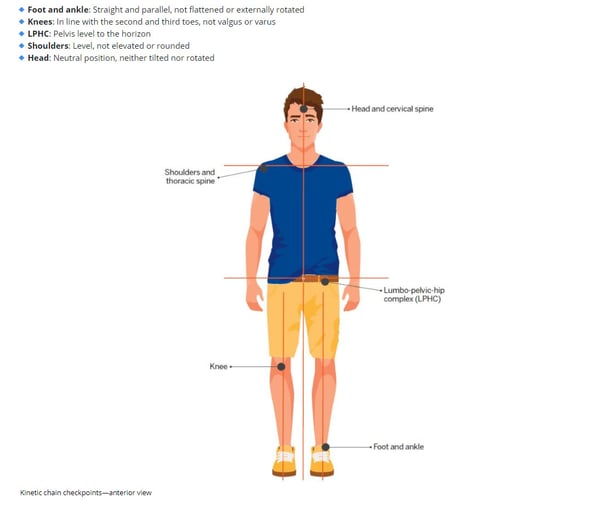
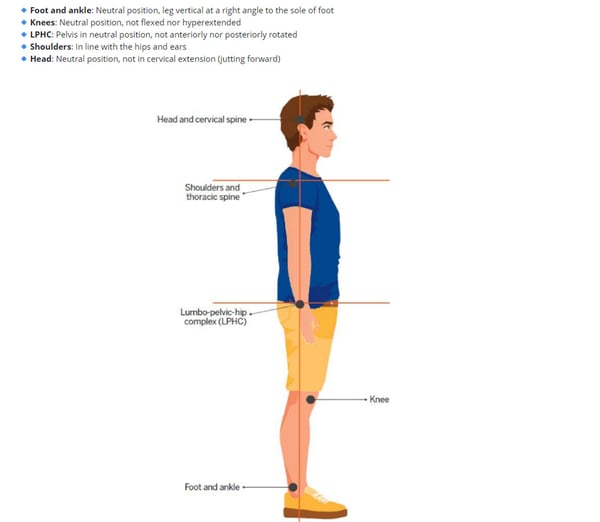
A push-up is an exercise y'all can practise anytime, anywhere, but only if you learn the how, what, when, and why of it. Incredibly, this 1 exercise can help you lot torch calories, build and tone musculus, gain strength, and positively impact your overall fitness, part, and performance. Due to its versatility, mastering this exercise can be vital to unlocking your truthful fitness potential. To help you master all things push-up, NASM is releasing a v-role series to aid yous explore and navigate the various facets of the movement. Let's begin the series by breaking downwardly the muscles involved during the movement, as well equally proper push-up form, technique, and more. *Note: Because this series volition delve into the specifics of programming, progressions, and specific phases of the the NASM OPT™ Model, information technology might assist to start familarize yourself with various aspects of the NASM-CPT Course. You lot can find many resources on the web log and NASM website for further description. You may be wondering, "Are push-ups for me?" The peachy matter near push-ups is that with appropriate guidance and modifications, if necessary, they can be done by just about anyone—from fitness first-timers to loftier-level athletes to anyone in between. Push-ups in their diverse forms can be used for multiple goals and outcomes such every bit improving upper torso function and command as role of a rehab programme or cosmetic practice routine; enhancing musculus development and definition; and building endurance, strength, and ability to maximize functional fitness and performance. Many fitness professionals and fitness enthusiasts often overlook the push-up because of its simplicity, but elementary doesn't hateful ineffective! When appropriately executed, just the basic push button-up tin be a cornerstone of a full-torso exercise routine. And, considering the about countless ways to modify, regress, and progress push-ups, they can be a conditioning staple for just about anyone, at any point in their fitness journeying. Typically idea of equally an upper-trunk simply motility, depending on the variation, push-ups can be extremely constructive at challenging the core and lower body muscles too—nearly the entire kinetic concatenation (scientific discipline term for, 'from your toes to your head'). However, attention to form and technique is paramount to reap maximum benefit for your muscles while minimizing the potential for hurting and injury. NASM is known for its focus on applying the science of how the body moves to fettle program development. So, in typical NASM fashion, to better sympathise the push-up, allow's beginning to explore and dig into the anatomy of the movement itself. With any exercise, information technology's helpful to know the muscles existence used and what they do to perform it properly and effectively. At the National Academy of Sports Medicine, we highly recommend consulting an NASM Certified Personal Trainer to help you assess your current level of fettle and motion capabilities. Working with a professional to assess your movement will help uncover potential muscle strength and flexibility imbalances that tin prevent proper course and promote compensations that will negatively impact exercise performance and mayhap lead to pain and injury over time. one. Hands should be slightly outside shoulder-width apart at chest level. ii. Feet should be hip-width apart and parallel to each other—not turned in or outward. iii. Hips should be in line with the shoulders, and the lower back should take a neutral curve—not completely flat, just not overly curved either. To assist with keeping proper lower dorsum alignment, slim your waistline by trying to pull your abdomen push button in and tightening your intestinal muscles. 4. The head should be positioned so the ears are in line with the shoulders. They should non drop down toward the floor or looking up in front of the body. * You can also do this position on an elevated surface or a wall. Choose your position based on your goals, strength, flexibility, and ability to perform the desired number of repetitions without bounty. While monitoring your trunk to ensure the correct setup position is maintained, it's essential to engage some key muscles before beginning the push-up motion. This process helps facilitate the listen-body connectedness referenced earlier to the primary muscles/muscle groups used in the push-up. Commencement: i. Engage the cadre (belly push to spine and tighten abdominals). ii. Squeeze the glutes. iii. Keeping force per unit area through the easily, curve the elbows to lower the chest, hips, and caput toward the ground- together as one. Heart: 1. Get as close to the floor or wall equally possible (olfactory organ, breast and belly button should be at the same level/elevation). ii. Continue to squeeze the glutes and engage the core. 3. Keep abiding pressure through the easily into the floor. End: 1. Engage the pectorals and imagine you're pushing the ground abroad from you lot. 2. Go along your energy focused in your core and Not in your toes. three. Go along to push up, ending, and at available range of motility in the arms while engaging your triceps. Let's review what makes the perfect button-up. When cueing a perfect standard push-up, whether performed with hands elevated or from the flooring, it's essential to set up the correct grade and positioning because the five kinetic chain checkpoints—a quick and easy reference guide to check your body alignment during practice. A good claiming to learn how to do more push-ups would be to employ a movement tempo of iv/ii/1. Relative to the push-upward movement, this tempo scheme would be applied by taking iv seconds to lower your body to the floor or surface, pausing for two seconds in the "hover" or middle position (joint stability), and pushing up as strong and equally fast as you tin for 1 second. Adjusting the tempo or speed of motility during exercises plays a significant function in how your body responds to your training. Longer tempos such as this force u.s.a. to slow downwards and actually movement with intention while also increasing the time our muscles are kept under tension. This tempo recommendation is standard for exercises used in Phase 1 of the NASM OPT Model and offers many benefits like enhanced trunk control and sensation, improved muscle development and connective tissue strength, endurance, and joint alignment and stability. Not easy past whatsoever ways, performing push button-ups in this way will ensure your muscles and joints are prepared for time to come progressions such as adding resistance or irresolute environments. Determining a starting point advisable for yous to perform a standard push-up while maintaining proper grade, body alignment, and tempo is key to progressing the push button-up over time. Over the remainder of this series, we'll be able to discuss in item how to make the standard push-up easier or more than challenging, too as add more variety through the apply of different modalities/equipment, movement tempos, set and repetition ranges according to a specific goal. Button-ups focus primarily on the following muscle groups: • Pectorals (chest muscles). It may seem niggling, but overlooking an exercise's musculus beefcake can seriously impact results and tedious-downwardly your fitness progress. Sensation of a musculus group's involvement in an exercise and focusing attention on information technology is essential to developing optimal neuromuscular command (substantially, listen and body connection to maximize form). To achieve the best results from an exercise, our encephalon and fretfulness must transport the appropriate signals to get the right muscles (in their entirety) to actuate. We'll address this topic in more detail in role ii of the serial. Notwithstanding, diverse factors can derail your body's power to practise this, such as flexibility and mobility restrictions, previous or current injuries, and less than ideal posture and torso alignment. As stated earlier, we tin can apply push-ups for a variety of goals and with various individuals; even so, to ensure optimal grade and technique, the power to maintain proper body alignment without compensation is paramount. Unfortunately, that's easier said than washed for most of us. Due to changes in how we, as a society, alive, work, and play, it's common for most people to have some alterations in torso alignment and musculus residue that volition make it more difficult to practice and motion without compensations. While nosotros've made a example for integrating push-ups into your routine every bit almost mandatory, it's essential to know your strength and move capabilities. Most chiefly, acknowledging your electric current capabilities will help determine what types of push-ups y'all should start with. When choosing what style of push button-up(s) to include in your routine, you lot must select the option(s) that best complement your lifestyle, desires, and movement tendencies to ensure you not but get to your goal but do so pain and/or injury-costless. After on in this series, we will dig a bit deeper into how to choose push-up variations right for yous. This concludes part i of our v-part series most button-ups. Part 2 of this series addresses common technique flaws associated with the push-up and what might cause them, and so highlight strategies to improve those compensations then y'all can ultimately get better at and progress your push-ups. See Office ii: How to Get Ameliorate At Push-upsThe Flexibility and Power of Push-ups: An Introduction to Their Effectiveness
*Important Annotation Before Performing Push-Ups
How to Set upwardly a correct standard button-up:
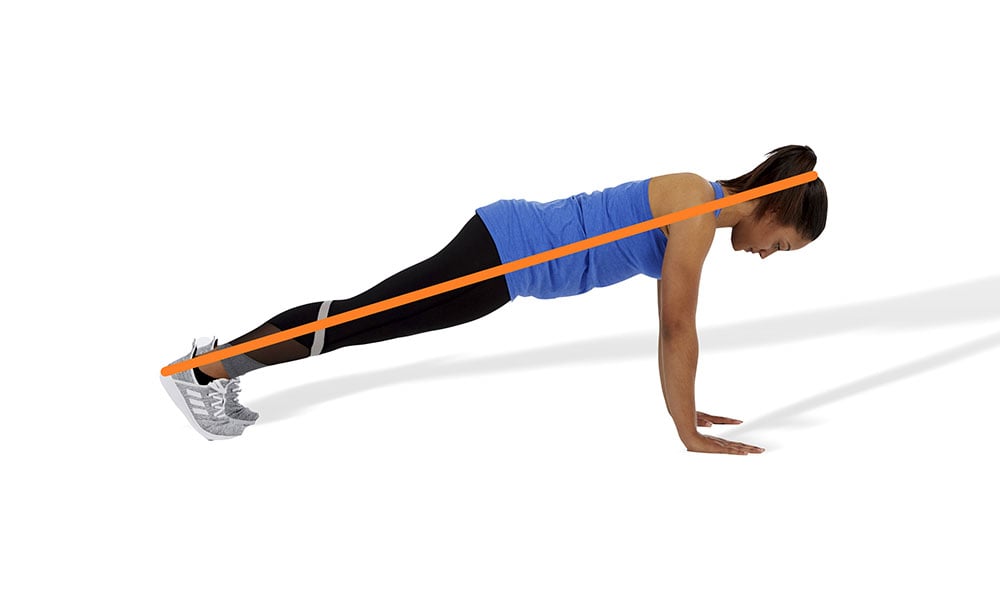
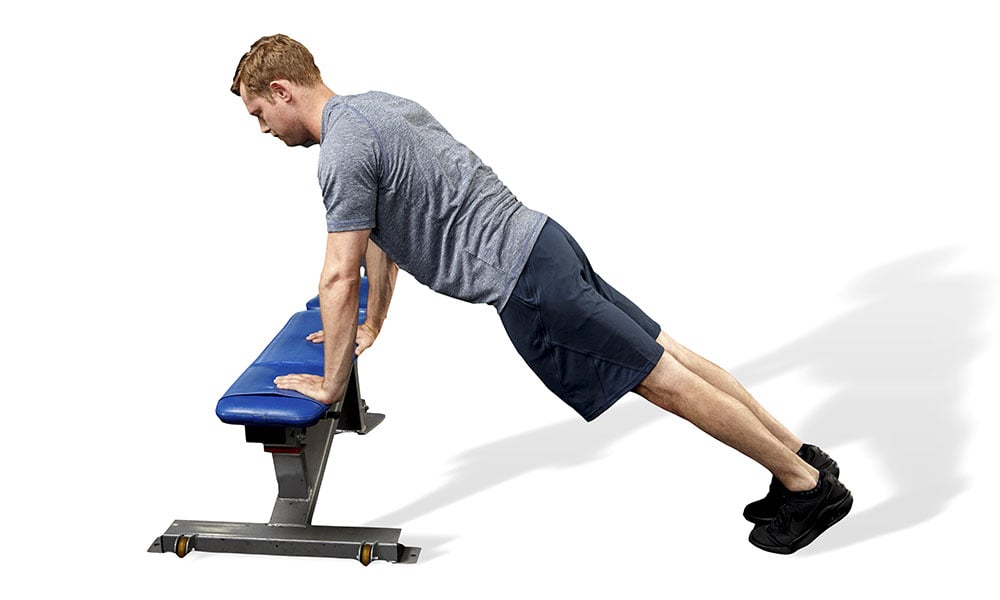
How to Perform a Standard Button-up With Proper Form
Quick Tip and Review: The V Kinetic Chain Checkpoints
How to Do More than Push button-ups
The Muscles Worked with Push-Ups
• Deltoids (shoulder muscles).
• Serratus anterior, trapezius, and rotator cuff (posture and shoulder back up muscles).
• Triceps (backside of the arm muscles).
• Core stabilizers (abdominals and spinal support muscles).
• Gluteals (hip muscles).Tips for Choosing the Right Push-up for You: Utilise Assessments and Determine Goals!
Lookout man for the Other Parts of the NASM Five-Function Series On Push-ups!
How to Know if You Doing Pushups Correctly
Source: https://blog.nasm.org/nasm-guide-to-push-ups/form-and-technique
0 Response to "How to Know if You Doing Pushups Correctly"
Post a Comment