Together Till the End Set Duo Everytime Continue
Multi-Factor Authentication
Protect your information with MFA. Here's the Why, When, and How.
The rise in cyber security attacks (e.g., phishing, ransomware) has created a need to further protect USD resources. An ID and a password are no longer enough to battle these crimes. By using modern Multi Factor Authentication technology (Duo), we can better determine that you are who you say you are, and are not a hacker with a stolen password. This technology has become the standard in most companies/universities and is now required by cyber security insurance providers.
How Does Multi-Factor Authentication Work?
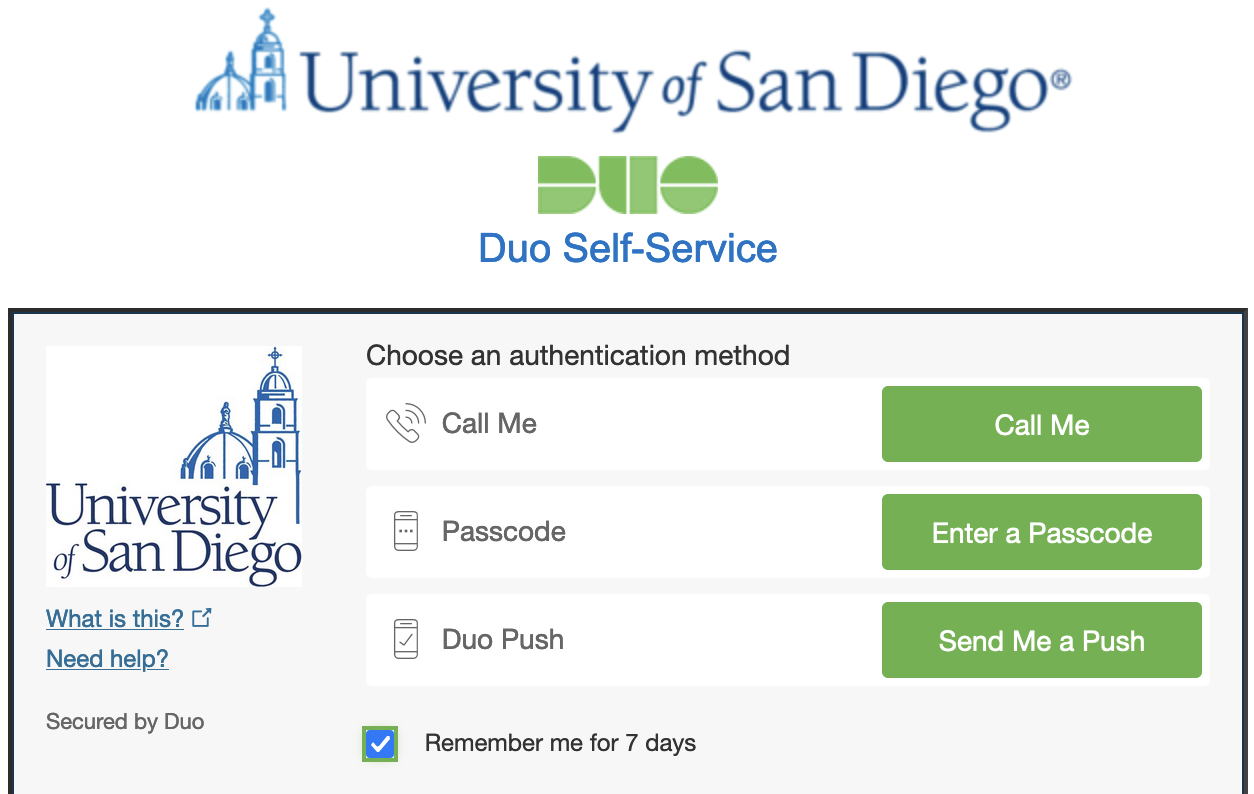
Once you have enrolled in MFA, when you attempt to access any of the university's critical applications, you will be prompted to enter your username and password as usual (the first "factor"). You will then be taken to the Duo's MFA screen where you will select the device of your choice and the preferred method of verification — push notification, a phone call, or a passcode — you will use to verify that it's you (the second "factor" or multi-factor).
Who and What is Covered by MFA?
All active USD employees and students are required to use MFA (Duo).
- How do I set up MFA for the first time?
- Have the following devices on, ready and connected to the internet: a computer as well as a mobile device or tablet.
- If you do not have a computer. You can complete these steps on your mobile device and the last step there is a link to send the activation code to your email. Which would need to be opened on your mobile device to finish activation.
- One device will be used to access the enrollment website, and the other will be the registered authenticating device. It can either be a phone or tablet.
- If you do not have a mobile device, continue with the instructions below but use Landline as your type of device. For employees, the landline can also be your Zoom Phone number.
- On the device used to complete the enrollment, open an internet browser and go to duoenrollment.sandiego.edu
- Log in with USDOne credentials
- Select "Start Setup

- Select the type of device you are going to be using. If you are going to use your zoom phone, select landline.

- After selecting mobile device and clicking continue. Select the Country of Cellular Carrier. Enter your 10 digit mobile number. Check the box to confirm the number was entered correctly. Click Continue.

- Select the model of your Cellular device. Android covers a wide range of phones i.e Samsung, LG, Motorola, and Google. Click Continue.

- Install the Duo Mobile App on your mobile Device. Once installed, open the Duo Mobile App on your mobile device and click "I have Duo Mobile installed" from the duoenrollment.sandiego.edu page.

- Open Duo Mobile on your phone and press the "+" button. Then scan the barcode on the screen by directing the camera of your mobile device towards the barcode. After scanning the QR code you have successfully Setup your Duo MFA.
- Note: If you did not have a second device such as a computer or tablet click on "Email me an activation link instead". Open the email on your mobile device, and complete the following steps below.

- Enter your email address and click Send Email

- Open Email with subject "Duo Mobile Activation" from sender "Duo Security" (no-reply@duosecurity.com) and click on the link in your email. Link will open your Duo mobile App on your phone to finish registration.

- Have the following devices on, ready and connected to the internet: a computer as well as a mobile device or tablet.
- How do I add a new device or manage an existing one?
Manage your Devices or create new devices.
- Navigate to duoenrollment.sandiego.edu
- Login With your USDOne credentials.
- Use desired Multi-Factor Authentication
- Make sure you save after any changes
- To add a new device, Click "Add another device"

- To Change the name of an existing device or re activate Duo Mobile Click Device Options

- If you have multiple devices you can change which device will be your default device in the "Default Device" Drop down menu.

- To change your preferred login method select from the options in the "When I log in" Drop down menu.

- What happens if I lose or change my device?
Changing devices with Duo is not a problem
If you changed or upgraded your device but it still has the same phone number, you can navigate to duoenrollment.sandiego.edu and use "Call Me" as your second form of Authentication. Here you can reactivate Duo Mobile, Add a device, or change device settings.
If you lose your device, or if your device is not able to receive Duo notifications, please contact the ITS Help Desk - the Help Desk team can assist you.
- Navigate to duoenrollment.sandiego.edu
- Login With your USDOne credentials.
- Select Call Me
- A blue bar will appear at the bottom of your screen saying it's calling you.

- Once you answer press 3 to continue.

- Select Device Options next to your phone number.

- Click reactivate Duo Mobile

- Click Call me or Text me

- Enter the 6 digit code and click verify

- Click Continue

- Select the type of device you are going to be using. If you are going to use your zoom phone select landline.
- After selecting mobile device and clicking continue. Select the Country of Cellular Carrier. Enter your 10 digit mobile number. Check the box to confirm the number was entered correctly. Click Continue
- Select the model of your Cellular device. Android covers a wide range of phones i.e Samsung, LG, Motorola, and Google. Click Continue
- Install the Duo Mobile App on your Cellular Device. Once installed, open the Duo Mobile App on your cellular device and click "I have Duo Mobile installed"
- Open Duo Mobile on your phone and press the "+" button. Then scan the barcode on the screen by directing the camera of your mobile device towards the barcode. After scanning the QR code you have successfully Setup your Duo MFA.
- (Optional) If you did not have a second device such as a computer or tablet click on "Email me an activation link instead". Open the email on your mobile device.
- Enter your email address and click Send Email
- Open Email labeled Duo Mobile Activation from sender Duo Security (no-reply@duosecurity.com) and click on the link in your email. Link will open your Duo mobile App on your phone to finish registration.
- How long will my authentication last?
Browser-based applications such as MySanDiego portal, Workday, Blackboard, Torero Mail, and Salesforce will have an option to remember you for 7 days. This applies only to the device and browser you used to log in with. If you login with Chrome and try to use Firefox you will be prompted to use MFA again (each can be remembered for 7 days). Access via VPN will continue to require MFA every time you use it.
(Note: Make sure to check "Remeber me for 7 Days)
- What happens if I upgrade or replace my phone with the same number?
Upgrade or Replaced Phone
If you upgraded or replaced your phone but kept the same number, re-activating your Duo mobile is quick and easy.
- Navigate to duoenrollment.sandiego.edu
- Login With your USDOne credentials.
- Select Call Me
- A blue bar will appear at the bottom of your screen saying it's calling you.
- Once you answer press 3 to continue.
- Select Device Options next to your phone number.
- Click reactivate Duo Mobile
- Click Call me or Text me
- Enter the 6 digit code and click verify
- Click Continue
- Select the type of device you are going to be using. If you are going to use your zoom phone select landline.
- After selecting mobile device and clicking continue. Select the Country of Cellular Carrier. Enter your 10 digit mobile number. Check the box to confirm the number was entered correctly. Click Continue
- Select the model of your Cellular device. Android covers a wide range of phones i.e Samsung, LG, Motorola, and Google. Click Continue
- Install the Duo Mobile App on your Cellular Device. Once installed, open the Duo Mobile App on your cellular device and click "I have Duo Mobile installed"
- Open Duo Mobile on your phone and press the "+" button. Then scan the barcode on the screen by directing the camera of your mobile device towards the barcode. After scanning the QR code you have successfully Setup your Duo MFA.
- (Optional) If you did not have a second device such as a computer or tablet click on "Email me an activation link instead". Open the email on your mobile device.
- Enter your email address and click Send Email
- Open Email labeled Duo Mobile Activation from sender Duo Security (no-reply@duosecurity.com) and click on the link in your email. Link will open your Duo mobile App on your phone to finish registration.
- Can I add multiple MFA Devices?
Adding Additional MFA devices.
- Navigate to duoenrollment.sandiego.edu
- Login With your USDOne credentials.
- Use desired Multi-Factor Authentication.
- Make sure you save after any changes.

- To add a new device, Click "+ Add another device"
- What Devices Can I Use?
Duo's MFA lets you link multiple devices to your account, so you can use your mobile phone, a landline or a tablet, as your second factor.
When you are doing your initial setup, you may add as many devices as you like (landline and/or
mobile). Subsequently, when you are logging in you can choose which device the authentication request is sent to and which authentication method you would like (via Duo Mobile App, SMS text message, or phone call). - I've selected to automatically send push notifications to my phone, but I need to authenticate using another device.
If you have checked the box that allows you to send a push to your mobile phone, you will automatically receive push notifications every time you are required to use MFA.
If you need to push the notification to another device, hit CANCEL at the bottom right of the screen. This will allow you to authenticate with another previously-registered device. If you no longer wish to receive automatic push notifications, uncheck the box next to "Automatically send a push". You can then Log In to your desired page or manage your devices.
- I've selected to automatically send push notifications to my phone, but I do not have that number anymore.
If you have checked the box that allows you to send a push to your mobile phone, you will automatically receive push notifications every time you are required to use MFA. The rest of the DUO screen will then be blurred out (as shown below):
If you have a new number and cannot receive the push notification sent to that phone, hit CANCEL at the bottom right of the screen. This will allow you to authenticate with another previously-registered device.
From here, it is recommended that you register another device to ensure that you always have at least two devices to use for MFA Authentication.


Source: https://www.sandiego.edu/its/security-and-privacy/two-factor-authentication.php
0 Response to "Together Till the End Set Duo Everytime Continue"
Post a Comment